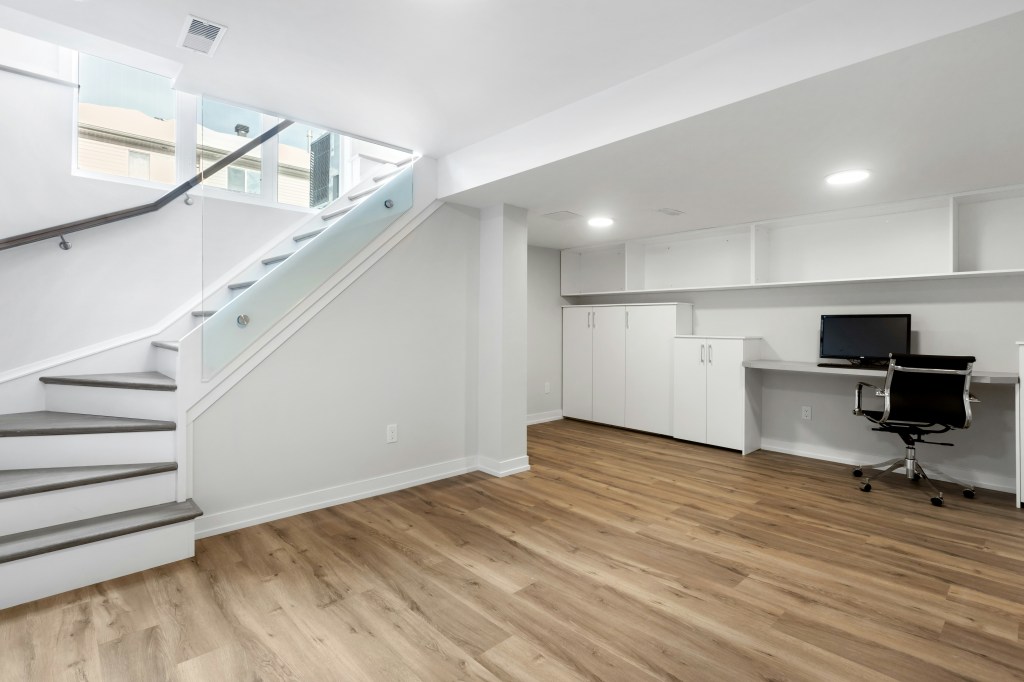
Photo by Point3D Commercial Imaging Ltd. on Unsplash
Additional Dwelling Units are increasingly recognized by all levels of government as an important way to increase the amount of affordable housing in Canada. For the last several years, the provincial government has been making changes to regulations to facilitate more ADUs, and the federal government has begun offering low-interest loans to help homeowners to create ADUs. CMHC also now offers a refinancing program to help use your home’s equity to finance your new ADU.
Terminology
First, let’s get some terms straight:
- Additional Dwelling Units (ADUs) and Additional Residential Units (ARUs) are completely interchangeable terms, meaning an extra home on the same property as an existing home.
- Accessory Dwelling Units (ADUs), Ancillary Dwelling Units (ADUs), and Auxiliary Dwelling Units (ADUs) are interchangeable with each other, all meaning a complete dwelling that’s a secondary use to the primary use of the property. This means almost the same thing as the other ADU (and ARU) above, but it’s a bit more technical: zoning by-laws always specify which use of the land (and which building) is primary, and which are secondary, establishing a hierarchy. “Additional” just means extra, while “Ancillary” or “Accessory” or “Auxiliary” refers to a lower spot in the hierarchy of uses or buildings.
- There are many less formal terms, including “secondary suite” (again noting that it’s extra or accessory); “basement suite” or “laneway suite” or “garden suite” (referring to where in the main building or on the lot the ADU is); other informal descriptions are numerous and common.
- “Garden Suite” is also a technical term, described in Section 39.1 of the Planning Act. There’s nothing in this section of the Act that requires municipalities to have special regulations of a Garden Suite, and many do not. Those that do still have such a regulation in their Zoning By-Law largely have it on the books as a legacy section, since other sections of their by-law usually allow for homes of any size as ADUs and therefore have no need for special regulations for Garden Suites no matter how they’re defined. Avoid this term if you can, and your application process should be much simpler!
- “Tiny Home” is not a technical term, and means different things to different people. For some it refers to a home on a chassis and wheels that can be towed around to idyllic locations as part of a nomadic lifestyle — an idea that doesn’t always fit well with planning regulations, which exist to ensure predictable and orderly long-term growth patterns. Unfortunately it’s best to avoid using “tiny home” terminology when talking to planners or bankers, as it might raise red flags for them and you’ll have to spend a lot of time explaining the difference between your ADU and a mobile home, park model trailer, or other type of non-permanent housing that’s typically highly regulated and difficult to finance. Instead, simply refer to your ADU as “detached”.
- “Detached” means in a separate building. Many, or even most, ADUs are in the primary building, usually in the basement; others are semi-detached, sharing a wall with the main building but otherwise being separate. A “detached” unit is completely separate, and most zoning by-laws will require it to be a minimum distance away from the main building. Some zones will allow for an ADU in the main building but not a detached ADU.
General Regulations
All development in Ontario must follow a whole hierarchy of regulation:
- The Planning Act, R.S.O. 1990 sets the rules for all development in Ontario, including delegating responsibility and power for that regulation to municipalities;
- The Provincial Planning Statement (PPS) sets expectations under the Planning Act, providing additional regulation, policy direction, and guidance about what kind of development should occur within the province;
- You can see an Ontario provincial guide to building a tiny home ADU here!
- The Northumberland County Official Plan (OP) provides further regulation and guidance, applying the rules of the Planning Act and the regulations of the PPS throughout the County. This includes determining the urban boundaries of member municipalities, setting distinctions between urban and rural land uses, regulating the use of land in agricultural and natural heritage areas, and regulations for development along County roads.
- Lower-tier municipal Official Plans (see the other pages here to find the OP for your community) further apply every level of regulation in a way that also considers the unique characteristics and values of that municipality, setting local guidelines and direction for all development.
- Lower-tier municipal Zoning By-Laws divide the municipality into specific zones by land use, applying all of the above rules, regulations, and guidelines for specific property types in specific areas of the municipality.
- The municipal staff responsible for this regulation are certified experts called Planners, and they can guide you through the process of development applications.
The Ontario Building Code
Another major regulation here is the Ontario Building Code, which regulates how all buildings in Ontario are built, setting basic standards for every aspect of a building.
At the time of writing, the Ontario Building Code (OBC) is undergoing changes as it is being harmonized to a large degree with the National Building Code of Canada: 2020. It is critical that you and/or your contractor meet the Building Code requirements while building your ADU to make sure that it is a safe and healthy place to live. You will need to follow the Building Code requirements to be able to secure the necessary building permits to build and then occupy the ADU.
Primarily the ADU will need to be designed to follow Section 9 of the OBC . The OBC sets out requirements for minimum space requirements for living areas with walls or open concept as well as for bathrooms and laundry facilities. Open concept design enables a smaller total floor space. The key to the OBC requirements are room sizes and window placement. Windows are required and the size of windows depends on the ADU size and what rooms they are in. Windows and door placement are vital to making sure occupants can exit the building if there is a fire or emergency.
The Ontario Fire Code
The Ontario Fire Code, a regulation under the Fire Protection and Prevention Act, 1997 (FPPA) applies across Ontario and consists of a set of minimum requirements for fire safety within and around existing buildings and facilities. The owner of the building is responsible for complying with the Fire Code, except where otherwise specified. Municipal fire departments enforce the Fire Code.
However, it is the OBC that sets out building requirements for exiting the dwelling quickly, such as if your ADU has a second floor or loft, as well as assess requirements for emergency services. The OBC requires that each building has access for fire trucks by public street, a private road or a yard. Check with your municipality as to their emergency service access requirements as you are considering the ADU placement as the precise requirements for fire, police and paramedic service access may vary amongst municipalities.
Ontario New Home Warranty Program
New homes, defined as a self-contained dwelling unit, are covered by the Tarion new home warranty provided that the builder is registered with the Home Construction Regulatory Authority (HCRA). Check with your builder to ensure that they are.
The HCRA is the regulator with responsibility to license builders and vendors of new homes under the New Home Construction Licensing Act, 2017 (NHCLA). Tarion Warranty Corporation (Tarion) is the administrator of the warranty plan and is the financial backstop for warranty obligations of vendors under the Ontario New Home Warranties Plan Act (ONHWPA).
Municipal Property Tax Implications
Property taxes are based on the assessed value of the property. If you’re adding another home to your property your assessed value will increase, and so therefore will your property taxes.
Properties are assessed by the Municipal Property Assessment Corporation (MPAC), based on the size and features of the buildings on the property. Municipal governments use this assessment data to calculate how much each property is taxed:
“Garden Suites” as defined in the Planning Act and some municipal zoning by-laws are exempt from property taxes under section 3(1)22.1 of the Assessment Act; but “Garden Suite” designation only applies to a mobile unit temporarily installed on your property to house an elderly (65+) relative, so make sure to talk to your Planner about whether your municipality even has Garden Suites in their Zoning By-Law and if it’s worth it for you to attempt to comply with those regulations.
A secondary unit (including a secondary unit inside your home, such as a basement suite) is also exempt (under section 3(1)22) if it was built to house an elderly or disabled relative and you get MPAC’s approval for the exemption.
Connecting Water to a Detached ADU
The ADU will have to meet residential plumbing requirements. You will need a qualified plumber to do this work.
At minimum you will need:
- a hot and cold-water supply
- a sink, bathtub or shower, toilet, or a drainless composting toilet in the bathroom
- a kitchen sink
- a laundry area (think stacked condo washer/dryer)
- a separate water shut-off valve(s)
You will also need to be connected to the municipal water/sewage system or the well water/septic system that the other residence on the property uses. You will need to check with your building department to make sure your existing septic system is sized properly. If not, you will need to upgrade your septic system so that it can safely treat the extra sewage flow.
Reverent Ontario Building Code provisions: 9.31.3.1 to 9.31.6.2
Connecting Electricity to a Detached ADU
The Electrical Safety Code, produced by Ontario’s Electrical Safety Authority (ESA), has further requirements when adding a second unit. You will need to get a separate electrical permit to do the electrical work in your ADU and the ESA will need to inspect the electrical work in your second unit.
It is recommended that you hire a licensed electrical contractor to do the work. They can also get the electrical permit and arrange inspections for you. For further information you can contact ESA directly at 1-877-ESA-SAFE (372-7233) or esasafe.com.
Other Resources:
- Ontario.ca page on adding a second unit to your home: https://www.ontario.ca/page/add-second-unit-your-house
- Multigenerational Home Renovation Tax Credit: if your ADU is intended for a disabled relative and you meet the criteria on this checklist, you can get a tax credit
With all of that in mind, start your journey toward tiny home ownership in your respective Northumberland municipality. From west to east:


Leave a Reply